Articles
Your Business Doesn’t Need to Do Everything Itself
The best operations are often built on specialized infrastructure working quietly behind the scenes.
Companies have traditionally thought about outsourcing in a fairly simple way: identify a task that can be done elsewhere, hand it off, and reduce costs.
But modern business operations are becoming much more interconnected than that.
Customer support needs to communicate with compliance. Compliance needs access to onboarding information. Payment operations depend on accurate data. Administrative teams need to coordinate with technology, finance and customers.
At a certain point, the challenge isn't finding someone to perform another task.
It's building an operational layer that connects everything together.
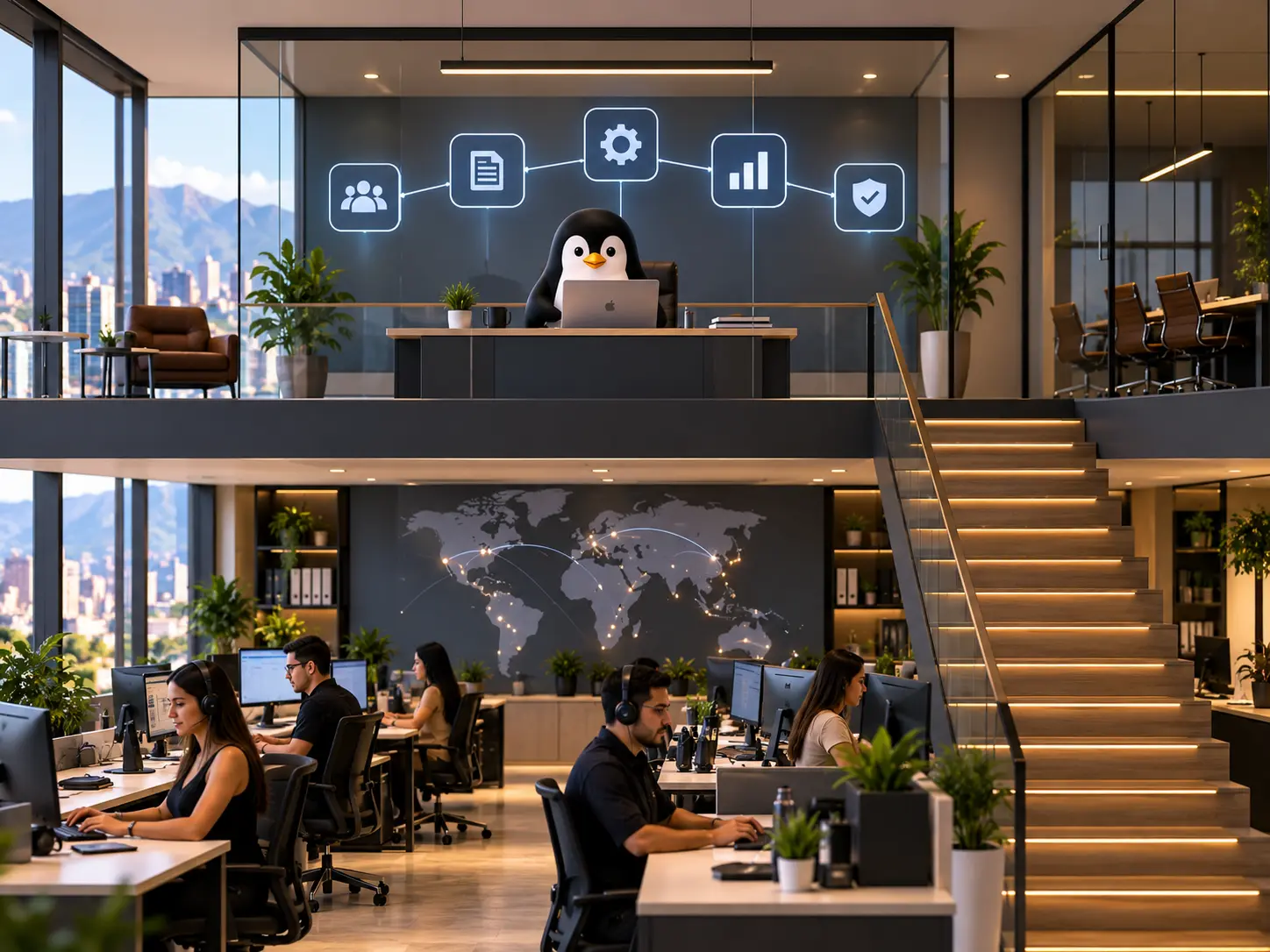
This is where the idea of a second-floor operation becomes useful.
The first floor does the work
Think about everything required to keep a modern company moving.
Customer support.
Administrative processes.
Data management.
Compliance support.
Document verification.
Payment operations.
Back-office workflows.
Technology.
Reporting.
Each function may require different people, systems and specialized providers.
These are the individual components of the operation. They're the first floor.
As a company grows, however, managing all those individual pieces can become an operation of its own.
Someone has to connect them.
The second floor coordinates the operation
A second-floor model sits above the individual processes.
Instead of asking a company to build, hire and manage every operational function internally, specialized infrastructure can coordinate those functions on its behalf.
That's a different way of thinking about BPO.
It isn't simply:
“Give us a task and we'll do it.”
It's:
“Tell us what the operation needs to accomplish, and we'll help build the infrastructure behind it.”
The distinction matters.
You don't need to own every part of your infrastructure
Growing companies often accumulate complexity almost accidentally.
First they hire someone for customer service.
Then someone for administration.
Then they need compliance support.
Then another person manages payments.
Then someone needs to supervise those people.
Eventually the company has created an entire internal department simply to support the business it originally wanted to build.
Sometimes that makes sense.
Sometimes it doesn't.
Specialized operational infrastructure allows companies to keep their internal teams focused on the areas where they actually create value while external specialists handle processes that don't need to live inside the company.
One operation, multiple specialists
The strongest operational infrastructure doesn't necessarily come from one provider doing everything.
It can come from different specialists working together through a coordinated operational layer.
This is the same principle increasingly used in technology and financial infrastructure.
A company doesn't need to own a data center to use cloud computing.
It doesn't need to become a financial institution to access sophisticated payment infrastructure.
And it doesn't necessarily need to build a large internal department to operate sophisticated back-office processes.
What matters is that the pieces work together.
Complexity shouldn't automatically become headcount
This becomes especially important as a company scales.
Growth creates more transactions, more customers, more documents, more exceptions and more administrative work.
The traditional response is often to hire.
Then hire again.
But headcount isn't always the best measurement of operational capacity.
A well-designed process supported by the right people and technology can often scale much further than a collection of disconnected internal roles.
The objective isn't simply to employ fewer people.
It's to make sure people are doing work that actually requires people.
Everything else should be standardized, automated, integrated or delegated whenever practical.
Build the company you want to run
There is another advantage to the second-floor model that rarely appears on a spreadsheet.
Management becomes simpler.
Founders and executives shouldn't have to understand every operational detail happening underneath their businesses.
They need visibility, accountability and results.
The infrastructure underneath should simply work.
That's ultimately what PinguinoBPO is designed to provide.
We help companies build and operate the processes behind their businesses, combining people, technology and specialized infrastructure according to what each operation actually needs.
Sometimes that means taking responsibility for a specific process.
Sometimes it means connecting several processes together.
And sometimes the most valuable thing we can do is identify a process that shouldn't require manual work at all.
The best infrastructure becomes invisible
Good operational infrastructure isn't supposed to become the center of the business.
It's supposed to let the business focus on something else.
Customers get answers.
Documents get processed.
Payments get coordinated.
Information gets where it needs to go.
Processes keep moving.
And the company doesn't have to build an entire organization behind every one of them.
That's the real opportunity of second-floor operations.
You don't have to do everything yourself to have control over how everything gets done.